Complete guide

How toPlay

From your first session to deep leaderboard runs. Start with the quick start, drop down to the reference sections when you need exact numbers, or jump straight to the strategy hub.

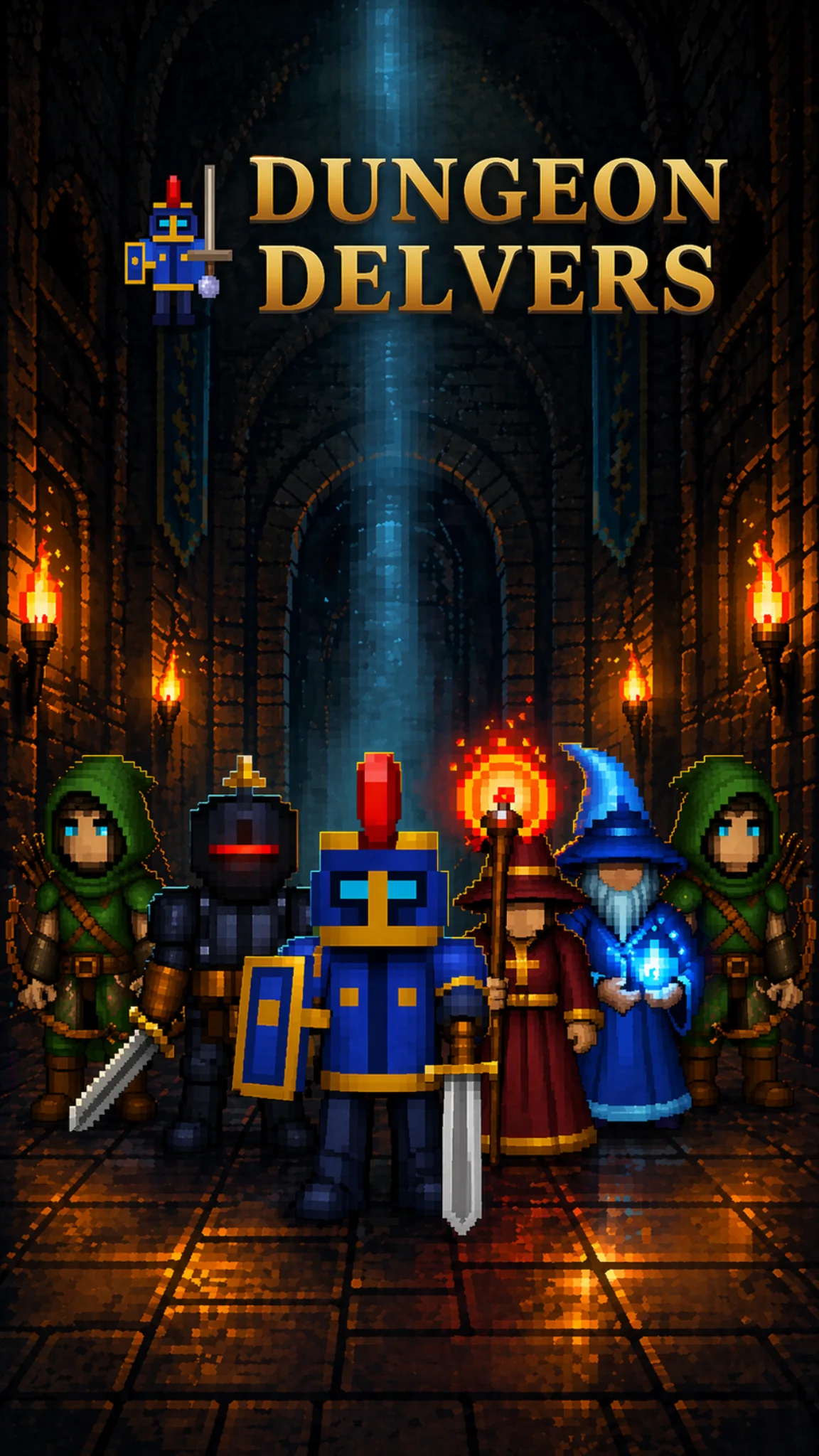
Dungeon Delvers party art
In one sentence

Choose a class, clear one room at a time.

If you stop reading right now and press play, that is enough to enjoy the first hour. Everything below is the smallest set of details that turns "playing" into "playing well."

1. Pick your platform

  • Web (browser): 3D only. Plays with keyboard.
  • Android: 2D and 3D modes — chosen at the render gate on launch. Plays with touch.

Both platforms share the same combat, classes, shop, enchantments and global leaderboard. Pick whichever fits where you are.

2. Solo or multiplayer

The main menu offers Singleplayer and Multiplayer.

  • Solo: pick a class, pick a subclass, confirm, enter.
  • Multiplayer: create a room and share the 6-character code, or join one. Up to 4 players.

3. Class & subclass

Three classes: Warrior, Archer, Mage. Each has two subclasses. If this is your first run, Warrior Sword & Shield is the safest.

4. Web controls (keyboard)

  • Move: W A S D.
  • Attack: Space.
  • Dash: Shift. Also breaks enemy grabs.
  • Class skill: Q (active only when the skill is off cooldown).

The browser version is 3D only. There is no render gate on the web — the game launches straight into the menu.

5. Android controls (touch)

  • Move: left joystick.
  • Attack: attack button (right side).
  • Dash: dash button. Also breaks enemy grabs.
  • Class skill: skill button — only appears when the skill is off cooldown.
  • Render gate: tap 2D or 3D once at the start of each session.
  • Menus: tap shop offers, the enchant prompt, and ready/continue when shown.

6. Settings (both platforms)

Graphics quality (Low / Medium / High / Very High) and the FPS overlay are saved per device. Change them before a run if performance feels slow on your hardware.

If an enemy grabs you, dash immediately. Dash is always your "get out of trouble" answer — keyboard Shift on web, dash button on Android.

7. Reading the HUD

  • HP bar: top-left. Watch it; healing is rarely automatic.
  • Gold counter: top-left under HP. This is what you spend at the shop.
  • Room number: visible at the top — every 5th room is a boss room.
  • Skill button: right side. A ring around it shows cooldown. Tap when full.
  • Dash button: right side. Always available unless the dash is on its own short cooldown.
The basic loop

What happens inside one room.

Every room follows the same shape. Learn this rhythm and the rest of the dungeon becomes much easier to read.

A

Enter

The room loads, the door closes behind you and the first wave spawns. The HUD shows the room number.

B

Clear

Fight the wave. Dash to reposition. Use your class skill before things go wrong, not after.

C

Loot

Gold drops on the floor. Chests open with one tap when you stand on them. Treasure weapons follow your class path.

D

Shop or descend

If the room contained a shop, the panel opens. Spend or skip, then tap Continue to go to the next room.

8. Your first run — quick checklist

  1. Pick 2D mode if you want speed. Pick 3D for the look.
  2. Choose Warrior Sword & Shield.
  3. Dash early. Don't save it for "later."
  4. Use your skill when the room has more than three enemies.
  5. Buy a Health Potion if you finished the floor below 50% HP.
  6. Open every chest you can.
  7. At room 5, slow down — the first boss is here.

9. Common first-run mistakes

  • Spending all your gold on Attack Boost and dying to the first boss with no HP.
  • Holding the dash button as a panic move only — dashing pre-emptively is much better.
  • Ignoring the enchantment table because it "costs too much" — even one level is a meaningful boost.
  • Standing still to attack. Movement is part of damage.

10. Multiplayer in 90 seconds

  • Host creates a room, shares the 6-character code.
  • Up to 4 players per room.
  • Each player picks class and subclass independently.
  • Shop flow waits for the whole party — don't rush past Continue.
  • Gold, ready state and player health sync between players.
Frost mage fighting a boss in Dungeon Delvers
Reference section

Numbers, not introductions.

The rest of this page is the deep reference: exact class stats, enchantment math, enemy roles, boss rules and lore. Use it when you want to push a leaderboard run instead of learn the basics.

Class & subclass stats

Exact relative values.

All numbers are relative to the baseline class chassis. Patch v3.4 last touched balance.

Warrior

Warrior

Sword & Shield · Longsword
  • Sword & Shield: 100% HP, baseline attack speed, baseline damage. Skill: Shield blocks incoming damage for a short window.
  • Longsword: 80% HP (−20%), slower attack speed, longer reach. Skill: Double Damage burst window.
MeleeFrontlineBeginner-safe
Archer

Archer

Bow · Longbow
  • Bow: 100% HP, baseline damage and projectile speed.
  • Longbow: 80% HP (−20%), +20% damage, +20% attack speed, faster projectile speed.
  • Shared skill: Rapid Shot — burst of arrows.
RangeMobileDamage
Mage

Mage

Fire Staff · Frost Staff
  • Both subclasses: 65% HP (−35%), +10% damage.
  • Fire Mage: Fire Rain AoE skill.
  • Frost Mage: Frost Rain AoE skill — same mechanic, different element.
  • Cooldowns increased in v3.4.
MagicAoEHigh risk

Enchantment math

  • Cost per level: 200 gold (was 100 before v3.4).
  • Max level: 8.
  • Total cost for max: 1,600 gold.
  • Applies to: swords, longswords, bows, longbows, fire staves, frost staves.
  • Persistence: survives weapon changes mid-run.

Shop reference

  • Health Potion: 60 gold → +30 max HP and full heal.
  • Attack Boost: 80 gold → +5 base damage (permanent for the run).
  • Weapon upgrades: tier-based, follows your class path.
  • Continue: descend to the next room.

Gold sources

  • Kills: small drops per enemy. Mid-floor enemies drop more.
  • Chests: larger gold drops, occasional weapon drop.
  • Boss rewards: a large pile after boss room clear.

Build priorities (post-v3.4)

With the higher enchant cost, optimal play usually buys at least one Health Potion before floor 5, and saves enchanting for after the first boss. Mages benefit from one early Attack Boost more than they used to, because their skill is now on a meaningful cooldown.

Enemy roles

The dungeon is enemy mixes, not enemies.

Memorizing routes is less useful than recognizing the role mix. The same floor feels different when ranged pressure, crowd pressure and tank pressure show up together.

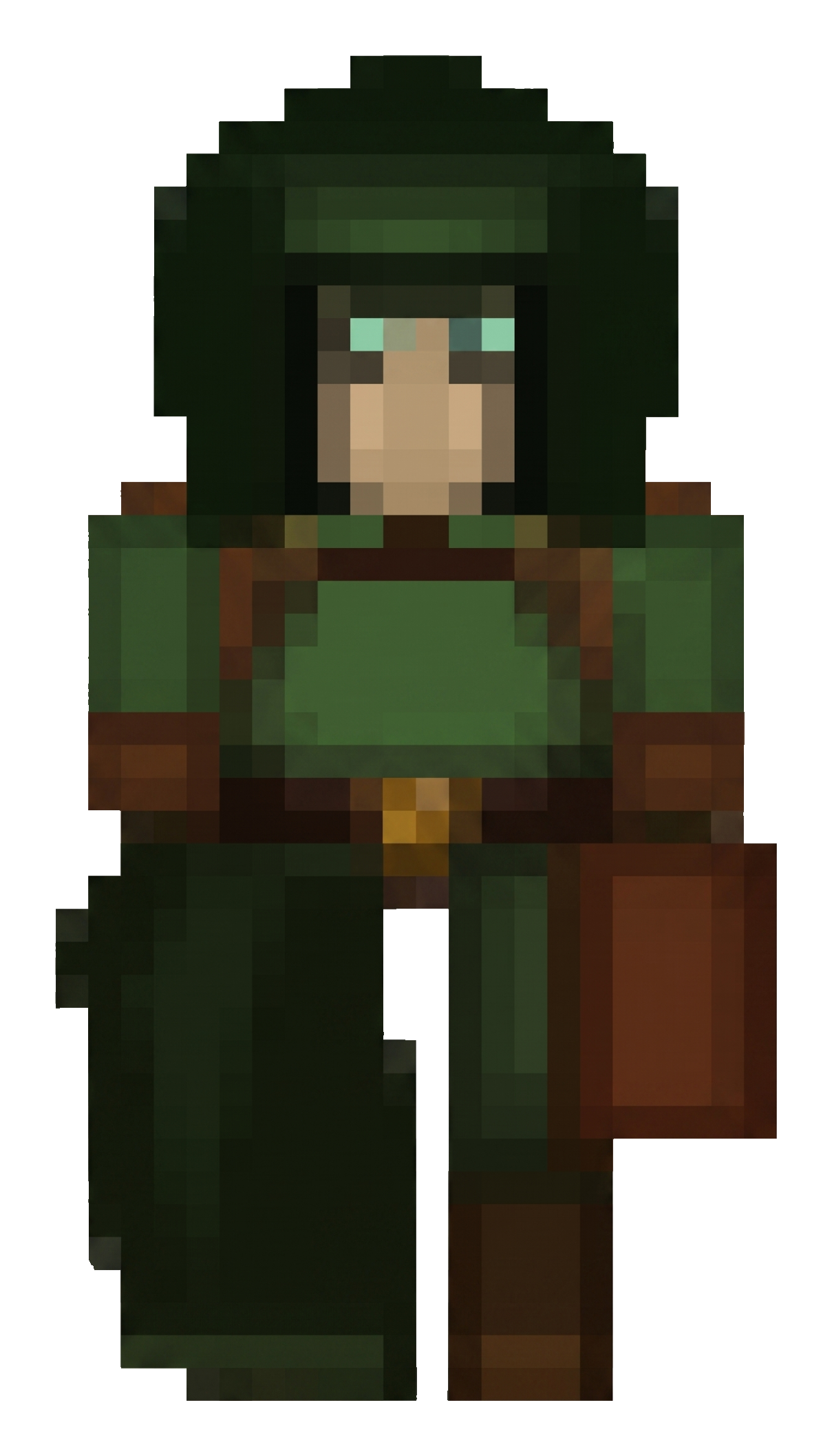
StalkerStalker
CreeperCreeper
SupporterSupporter
SniperSniper
GuardGuard
TitanTitan
Dungeon LordDungeon Lord

Mobile pressure: Stalker, Creeper, Dasher

Fast enemies that force movement. Standing still lets them collapse the room into a corner trap. Dash early, keep diagonal escape lines open, and don't spend your skill on the first one — there is almost always a second wave.

Ranged pressure: Sniper, Supporter

Ranged and support roles change target priority. The closest enemy is not always the right target. A clean reposition toward the back line often wins the room faster than burning cooldowns on the front.

Tank pressure: Guard, Titan

Heavy enemies punish random attacks. Use them as anchors — move around them, clear smaller threats, then commit when the room is safer. Mages should avoid landing rain skills purely on a tank: the time-to-clear is poor.

The Dungeon Lord (boss)

Appears every 5th room. Higher HP, harder hits, and usually flanked by regular enemies for added pressure. Entering a boss floor with unspent gold means a previous shop decision was probably too passive.

Boss floor rules

  • Boss floors are rooms 5, 10, 15, 20, etc.
  • The Dungeon Lord has substantially higher HP and damage than regular mobs.
  • Regular enemies can still spawn during a boss fight.
  • Boss reward chests give a noticeable gold spike.

Boss prep by class

  • Warrior: arrive with a Health Potion in reserve and the Shield/Double Damage skill off cooldown.
  • Archer: position deep, kite around walls and burn Rapid Shot when the boss commits to a heavy attack.
  • Mage: keep Rain off cooldown for the boss room entry — your strongest moment is the first 3 seconds.

Gold = pressure converted to choice.

Spending only on damage works for Archer and Mage if your movement is clean. Warrior usually benefits from health early, because each melee mistake is more expensive. Enchantments are long-term run power — best when survival is already stable.

Chest math

Most chests give gold. A subset gives a treasure weapon. Treasure drops follow your current weapon path, which means swords-into-longswords, bows-into-longbows, fire-into-frost are not random — they reflect the class you are playing.

Spending priorities

  • Below 50% HP entering a shop: buy a Health Potion first.
  • Rooms taking too long: buy Attack Boost.
  • Stable run: save for enchantment table.

Beginner priority

For a first serious leaderboard attempt: Warrior Sword & Shield, at least one health upgrade before floor 10's boss, and enchantments only after the basics feel reliable.

Setting

The Hall of Legends and the dungeon below it.

Dungeon Delvers takes place beneath a fortress whose surface long ago became a tomb. The Hall of Legends — the leaderboard you see on the main menu — is the historical record of the adventurers who tried to map the lower floors. Most did not return. The deepest room any of them reached is what gives them a place in the Hall.

The dungeon is not procedurally infinite in lore terms — it is finite, dark, and structured around the patterns left behind by what built it. Every 5th room ends in a Dungeon Lord because those floors were built as gate-keepers, not as natural rooms. The torches that line each corridor were lit by the previous expedition.

Multiplayer roles

Co-op identity.

A balanced party usually has one player comfortable on the frontline, one player clearing from range, and one player saving AoE for crowded moments. Four identical class picks still works — but the team must solve the same weakness together.

Multiplayer pacing

The party sets the floor.

Multiplayer runs are limited by the slowest build. The fastest player should not always set the pace. Boss floors are won when the party enters with a shared plan, not when the host rushes through.
Ready to play?

Pick a class → pick a subclass → clear rooms → collect gold → open chests → buy upgrades → use your skill well → enchant when possible → defeat bosses → climb the leaderboard.